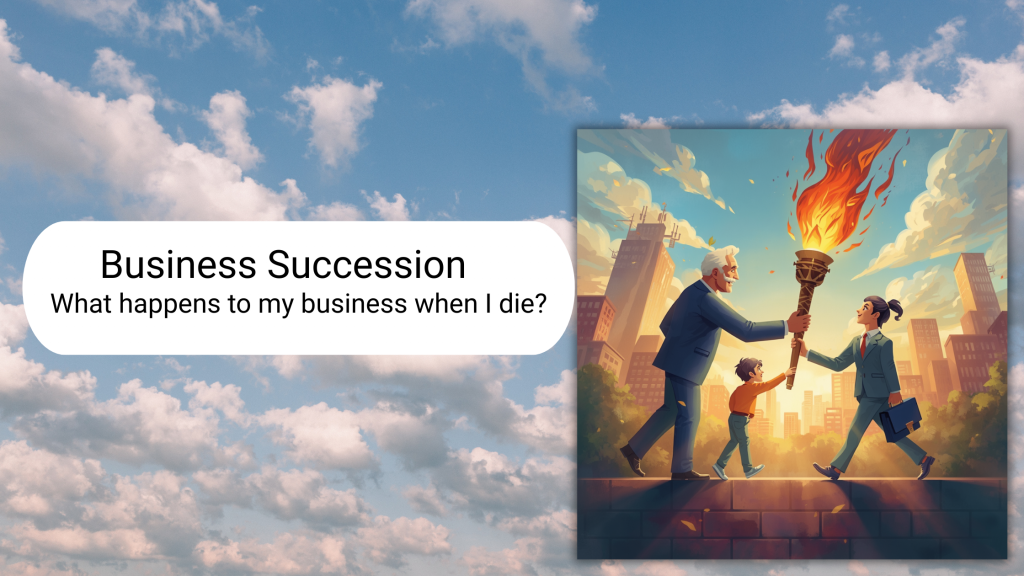
You may have spent years building something valuable, but if you don’t have a plan, what happens to your business when you die may be decided by default rules, your business documents, or a probate court. Without proper planning, a business owner’s death can create uncertainty for family members, employees, business partners, and customers. What happens to your business after your death depends heavily on how your business is structured and whether a succession plan has been implemented.
If You’re a Sole Proprietor
A sole proprietorship generally isn’t legally separate from you, the owner. When you die, the business assets, equipment, inventory, accounts, and goodwill, become part of your estate. Those assets then pass according to your will, or, if you don’t have one, under Texas intestacy law.
The challenge is continuity. Without a plan, there may be no one with clear authority to keep the doors open, pay employees, or fulfill contracts during the gap between your death and the completion of probate. For some sole proprietors, the reality is that the business is wound down or sold rather than continued.
If You Have a Partnership
If you co-own a business, your partnership agreement is the first place to look. A well-drafted agreement typically spells out what happens when a partner dies, such as a buyout of the deceased partner’s interest by the surviving partners.
If there’s no agreement addressing it, Texas default rules apply, and they may not produce the result anyone wanted. Your ownership interest generally passes to your estate, but your heirs usually don’t automatically step into your role as an active partner. That can create friction between grieving family members who now hold an economic interest and surviving partners.
If You Own an LLC
For a limited liability company, the company agreement (sometimes called an operating agreement) controls. When an LLC member of a multiple member LLC dies, the heirs often inherit only the economic rights to the interest, the right to distributions, but not automatically the management and voting rights, unless the company agreement says otherwise or the remaining members consent. In other words, your family might be entitled to the profits but have no say in running the company. Whether that’s the outcome you want depends entirely on your goals and how your documents are written.
For a single member LLC, the owner’s interest generally becomes part of the estate. In some cases the LLC can be continued while some may have to be dissolved.
If You Own a Corporation
Shares of stock are personal property that pass through your estate to your heirs or beneficiaries. In a closely held business, questions of control, who votes the shares, and whether other shareholders have rights to buy them often come to the surface, and provisions in shareholder agreements frequently govern those issues. Without these provisions, disputes regarding ownership and control may arise.
Business Succession Planning
Some tools may be available to help business owners prepare for the future, including:
A Buy-Sell Agreement
For businesses with more than one owner, a buy-sell agreement can:
- Establish who can buy a deceased owner’s interest (the other owners, the company, or a combination)
- Set a price or valuation method in advance, avoiding fights over what the interest is worth
- Spell out the terms of the transition
Revocable Living Trust
A trust that properly holds ownership interests may allow the interests to pass according to the owner’s wishes.
Company and Shareholder Agreements
Properly drafted governing documents can provide clear instructions regarding ownership transitions and management authority.
Coordinating Your Business and Your Estate Plan
An issue can occur when your will or trust says one thing while the business documents say another. Generally, the governing business document, your partnership agreement, company agreement, or shareholder agreement, controls what happens to the ownership interest, so your estate plan should work with those documents.
Other planning considerations can include:
- Succession: Who will actually run the business? A family member, a key employee, or a buyer? Leadership and ownership aren’t always the same person.
- Holding the interest in a trust, which in some situations can ease the transition and avoid probate delays for the business interest.
- Liquidity: Will your estate have enough cash to cover debts and any taxes without forcing a fire sale of the business?
- Authority during the gap: Making sure someone has clear legal authority to keep operations running between your death and the conclusion of probate.
Incapacity
Death isn’t the only risk to a business. If you become seriously ill or incapacitated, who can sign checks, make decisions, and keep things moving? Planning for that scenario, often through properly drafted powers of attorney and business documents, is just as important as planning for death.
Conclusion
What happens to your business when you die depends on your type of entity, your business agreements, and the estate plan you put in place. Left unplanned, the default rules and the probate process may control what happens. With coordinated planning, you can decide who takes over your interests and how.