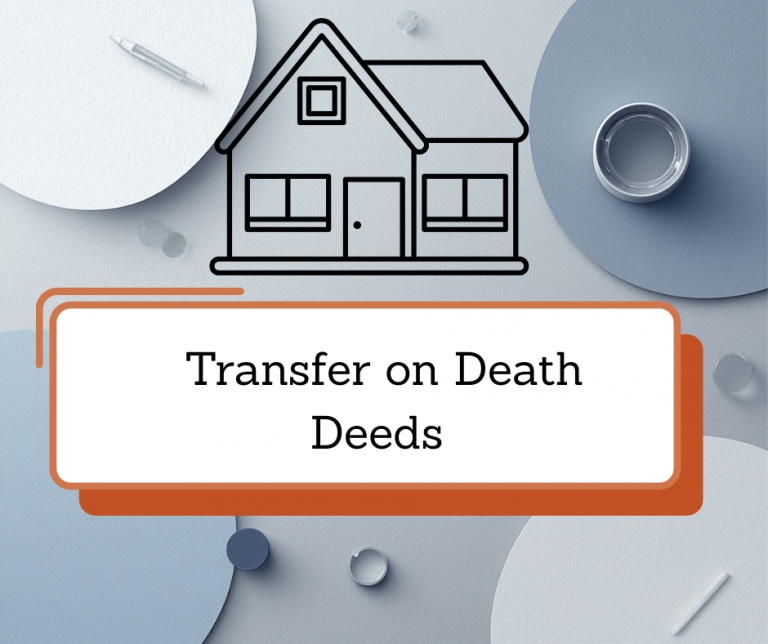

Transfer on Death Deeds
For many Texans, their home is one of their most valuable asset. Naturally, they want to ensure it passes smoothly to their loved ones after death. One useful tool considered is the Transfer on Death Deed (also known as a TODD).
What Is a Transfer on Death Deed?
A Transfer on Death Deed is a legal document that allows you to name beneficiaries who will inherit your real property when you die, in many cases, without the property going through probate.
The key feature is that the transfer doesn’t take effect until your death. During your lifetime, you retain complete ownership and control of the property. You can sell it, mortgage it, or revoke the deed at any time without needing permission from the named beneficiaries.
TODDs are authorized by Texas statute and must meet specific legal requirements. It must be in writing and contain the essential elements of a recordable deed, including a legal description of the property. The deed must state that the transfer occurs at the transferor’s death, and it must be signed and acknowledged (notarized) before your death.
Critically, the deed must be recorded in the county’s real property records before your death.
Revoking or Changing a TODD
One of the most important features of TODDs is that they’re revocable. You can change your mind at any time during your lifetime. To revoke a TODD, you must execute and record a revocation document in the same county where the original deed is recorded.
Important note: Simply creating a will that disposes of the property differently doesn’t revoke a TODD.
Important Considerations
- TODDs can avoid probate for the specific property described in the deed. If you have other assets, those may still require probate.
- The property passes subject to any liens or mortgages. If there’s a mortgage on the property when you die, the beneficiary inherits both the property and the debt. Some mortgages contain “due on sale” clauses that could potentially be triggered, though federal law provides some protections for certain family transfers.
- TODDs don’t address incapacity planning. If you become incapacitated, the TODD doesn’t help manage the property during your lifetime.
- TODDS don’t provide asset protection. The property remains in your estate for creditor purposes during your lifetime, and creditors may be able to reach it after death if your estate has unpaid debts.
- If you might need Medicaid benefits for long-term care in the future, consult with an attorney before executing a TODD. While the deed doesn’t trigger an immediate gift for Medicaid purposes, the transfer at death could affect your estate’s obligation to reimburse Medicaid for benefits received, under Medicaid estate recovery rules.
Lady Bird Deeds
A Lady Bird deed (more formally called an enhanced life estate deed) is similar but distinct from a TODD. With a Lady Bird deed, you transfer property to beneficiaries but retain a life estate with enhanced powers, including the power to sell or mortgage the property during your lifetime.
Lady Bird deeds are recognized under Texas common law but are not specifically addressed by Texas statute.
TODDs vs. Other Planning Tools
How do TODDs compare to other estate planning options?
- TODDs vs. Joint Ownership: Adding someone as a joint owner with rights of survivorship avoids probate but gives them immediate ownership rights. They could interfere with your ability to sell or mortgage the property, and the property could be subject to their creditors.
- TODDs vs. Living Trusts: A revocable living trust provides more comprehensive planning, including incapacity protection and the ability to add conditions on inheritance. However, trusts are often more expensive to establish and require formally transferring the property into the trust. TODDs can be simpler and cheaper but only address the single property and only deal with death, not incapacity.
- TODDs vs. Wills: Property passing through a will must go through probate. A TODD can avoid this but only works for real property. Many people use both a TODD for real estate and a will for other assets and important provisions like guardian nominations.
Closing Thoughts
Like any estate planning tool, TODDs aren’t perfect for everyone or every situation. They work best as part of a comprehensive estate plan that addresses all your assets, considers your family situation, plans for incapacity as well as death, and aligns with your overall goals for your legacy. Consulting with an estate planning attorney can help you determine if a TODD can work for your situation.